Courses
Getting to Know the MQTT Protocol
Find out what the MQTT protocol is, how the publish/subscribe model works and why it is essential for IoT and industrial automation in Industry 4.0.

The industrial Automation Pyramid is a visual representation that organizes the different layers of systems and technologies used to automate industrial processes.
 Filippo MaselliControl and Automation Engineer
2 min read
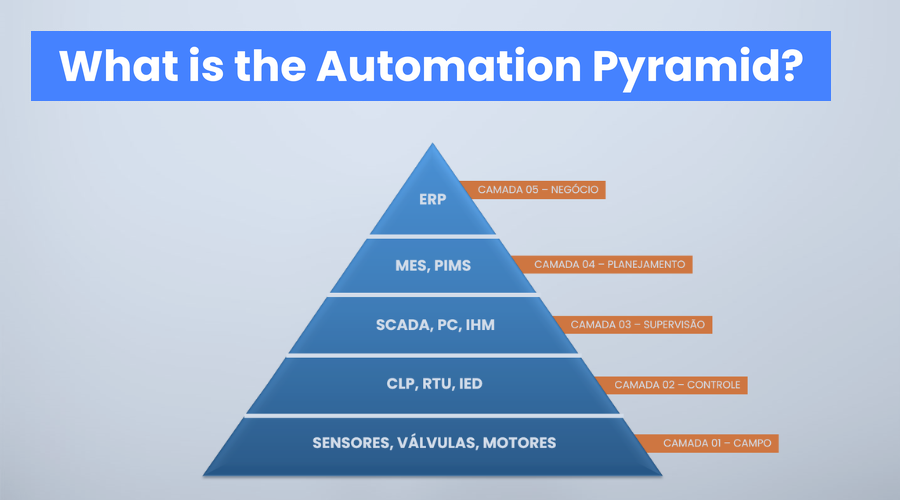
The industrial Automation Pyramid is a visual representation that organizes the different layers of systems and technologies used to automate industrial processes. This hierarchical structure provides a clear understanding of the various layers of automation, from field control to corporate management. The industrial Automation Pyramid is made up of five levels:
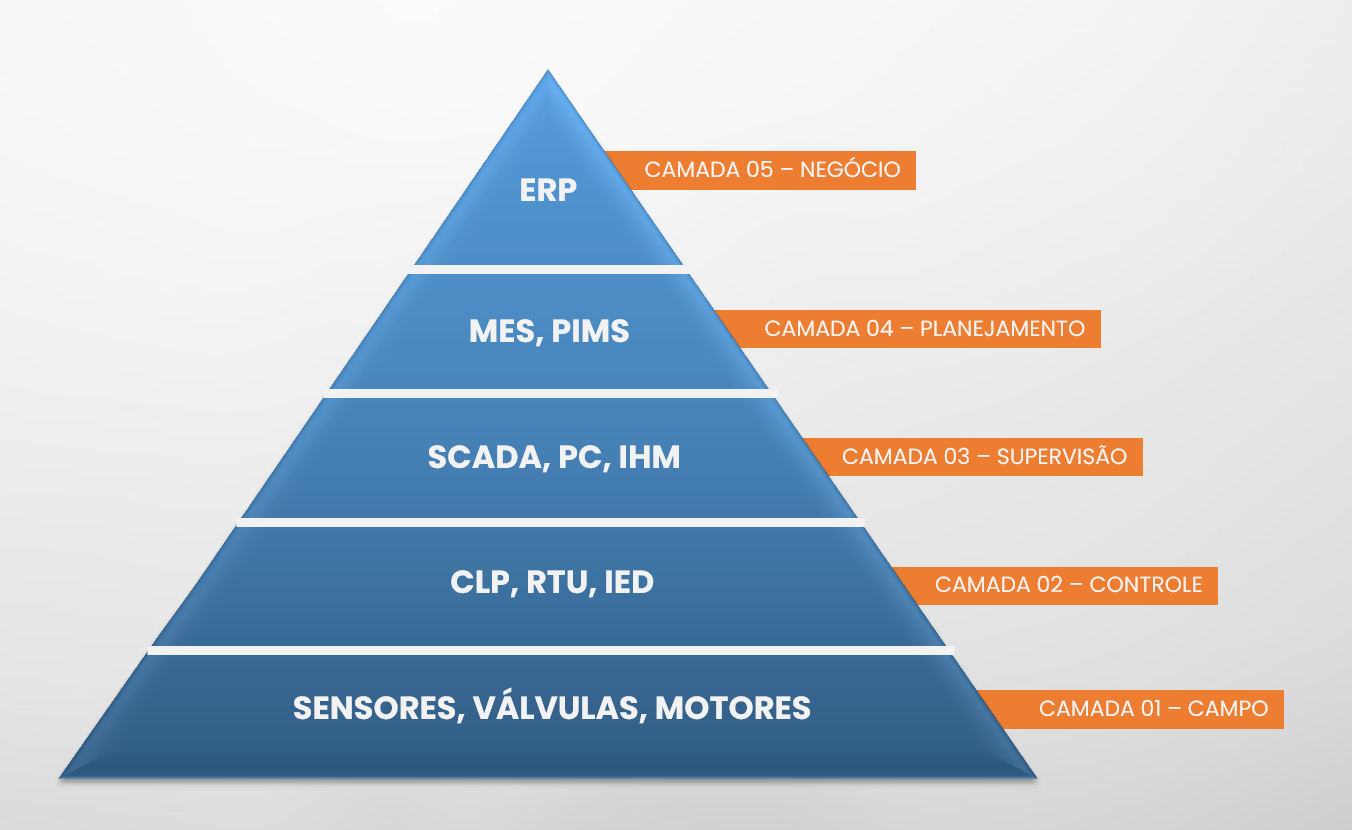
Field Layer or Layer 1: This is the base of the pyramid, where the equipment and processes in direct contact with the product are located, such as sensors, actuators, valves, motors, etc. This layer contains the hardware responsible for collecting data on process variables, such as temperature, pressure, flow, level, etc., and for carrying out control actions, such as starting, stopping, adjusting, etc. This is the layer closest to the physical reality of production.
Control Layer or Layer 2: This layer contains the hardware and software responsible for controlling and monitoring the field devices, through the PLC, that is, the Programmable Logic Controller, or simply through a remote telemetry unit. The PLC receives data from the field devices, processes the information, applies control algorithms, generates output commands, and so on. This layer is what ensures that processes run properly and safely.
Supervisory Layer or Layer 3: This layer contains hardware and software such as supervisory control and data acquisition (SCADA) systems and human-machine interfaces (HMI). These components are responsible for providing a user interface for monitoring, controlling and managing the entire automation system. It allows human operators to interact with the system, view the process status, adjust operating parameters and respond to events or alarms. All information from the industrial process is also stored in a database.
Planning Layer or Layer 4: This layer contains software responsible for coordinating and optimizing production processes, through systems such as MES (Manufacturing Execution System). This system receives data from the control and supervisory systems, analyzes process performance, applies optimization techniques, and generates reports, indicators, charts, etc. While MES focuses on production execution operations and integration with higher-level corporate systems, SCADA is designed for real-time monitoring and control of physical industrial processes at the lower levels of the automation hierarchy.
Business Layer or Layer 5: This layer contains ERP (Enterprise Resource Planning) software to integrate and optimize the company's administrative and financial processes. It is the top layer of the pyramid, responsible for strategic planning and corporate management of the business. At this level, decisions are made that affect all the other levels of the pyramid, such as objectives, targets, resources, investments, indicators, etc.
The industrial Automation Pyramid is a conceptual model that organizes and describes the different levels of systems and technologies involved in automating industrial processes. Each level of the pyramid plays an essential role, from real-time data collection on the shop floor to strategic decision-making at the highest levels of management.
// keep reading
Find out what the MQTT protocol is, how the publish/subscribe model works and why it is essential for IoT and industrial automation in Industry 4.0.
PLC stands for Programmable Logic Controller, an electronic device used to automate industrial and residential processes…
PLC stands for “Programmable Logic Controller”. It is an electronic device used to control machines and industrial processes.
// from article to practice
In FM4 courses you program PLCs and SCADA systems hands-on, with step-by-step lessons and instructor support.