Courses
Getting to Know the MQTT Protocol
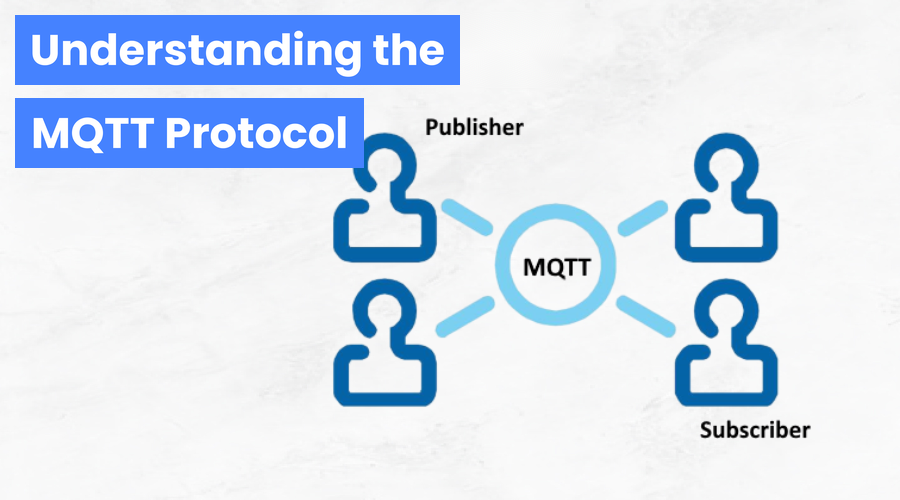
Find out what the MQTT protocol is, how the publish/subscribe model works and why it is essential for IoT and industrial automation in Industry 4.0.

HMI stands for Human-Machine Interface, a device that allows an operator or user to interact with a machine or an industrial process.
 Filippo MaselliControl and Automation Engineer
3 min read
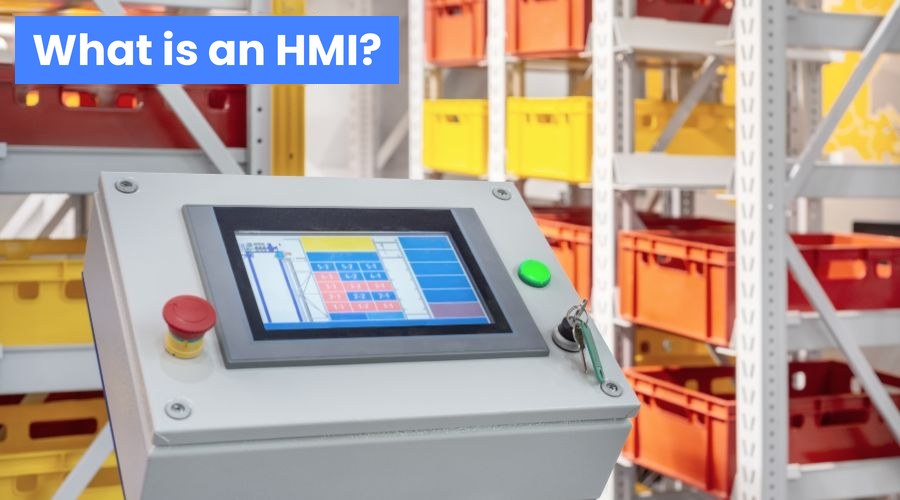
HMI stands for Human-Machine Interface, a device that allows an operator or user to interact with a machine or an industrial process. The HMI provides a graphical interface, either a touchscreen or buttons and a display, through which the operator can view and control process variables such as temperature, pressure, level, flow, etc.
The HMI is an important component of an industrial automation system, because it makes communication between people and machines easier, increasing the efficiency, quality and safety of production. The HMI also allows the operator to monitor the status of field equipment, send commands to it, and view charts, alarms, reports, etc.
HMIs can be applied in many industrial sectors and processes, such as energy, water, gas, oil, metallurgy, chemicals, pharmaceuticals, food, automotive, etc. A simple analogy is the HMI of an ATM, where the user interacts with the touchscreen graphical interface and, based on their commands, the machine can, for example, dispense cash from their account.
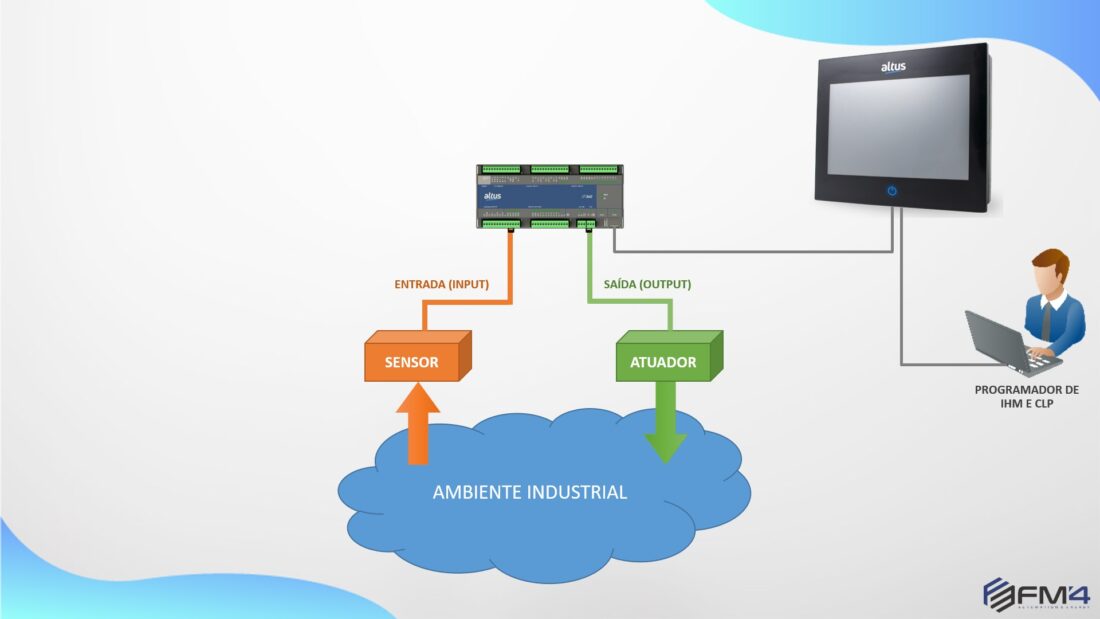
The HMI works by communicating with the programmable logic controller (PLC), the device that controls the industrial process or machine. The PLC receives signals from the sensors, which measure the process variables, and sends signals to the actuators, which drive the field equipment. The PLC also runs a program that defines the control logic of the process, that is, the conditions and actions the PLC must carry out.
The HMI receives data from and sends data to the PLC through a communication protocol, which can be serial, Ethernet, wireless, etc. The HMI displays the PLC data on its graphical interface, which is configured by the HMI programmer using specific programming software. The HMI programmer can define the layout, colors, symbols, buttons, fields, etc. of the graphical interface according to the operator's needs and preferences.
The operator can view and control the process variables through the HMI by touching the screen or pressing the buttons. The HMI sends the operator's commands to the PLC, which executes them, changing the actuator signals. The PLC also sends the updated process variable data back to the HMI, which displays it on its graphical interface, closing the communication cycle.
An HMI has many functions, which can vary according to the model, the manufacturer and the HMI programming software. Some of the main functions of an HMI are:
An HMI is a device that allows an operator or user to interact with a machine or an industrial process. The HMI provides a graphical interface, either a touchscreen or buttons and a display, through which the operator can view and control the process variables. The HMI works by communicating with the PLC, the device that controls the industrial process or machine. The HMI has many functions, which are configured by the HMI programmer using specific programming software.
// keep reading
Find out what the MQTT protocol is, how the publish/subscribe model works and why it is essential for IoT and industrial automation in Industry 4.0.
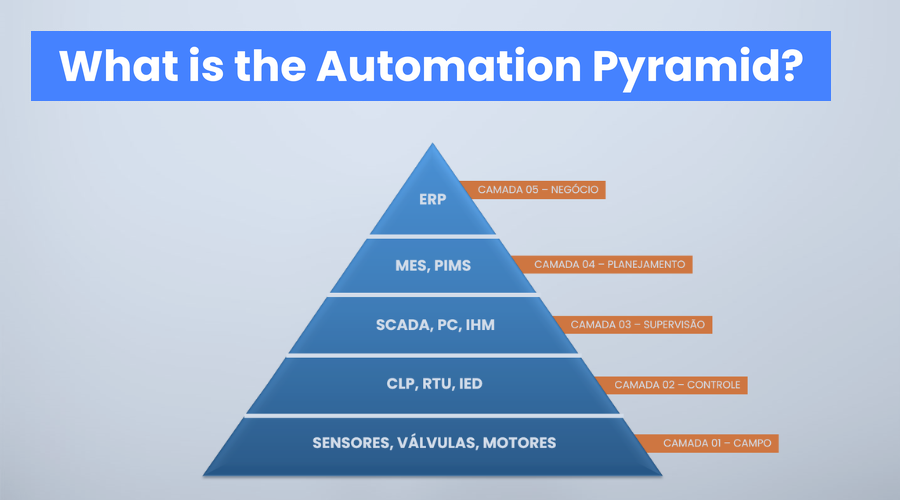
The industrial Automation Pyramid is a visual representation that organizes the different layers of systems and technologies used to automate industrial processes.
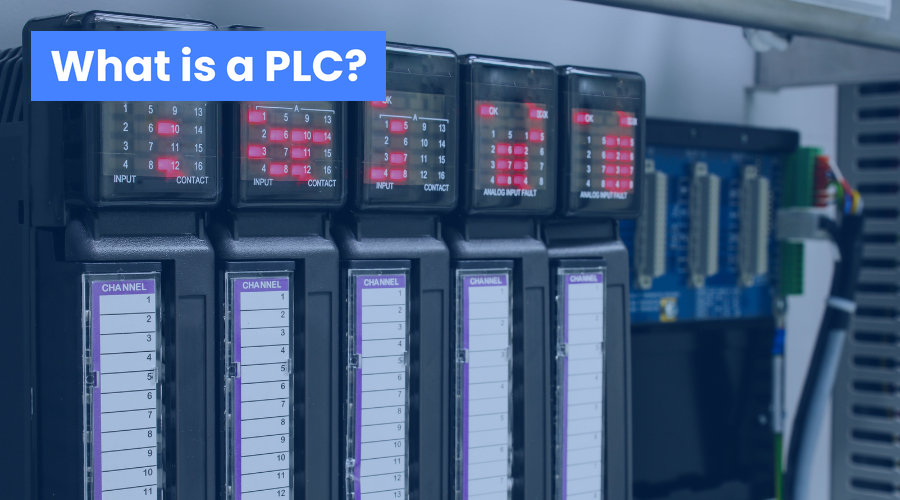
PLC stands for “Programmable Logic Controller”. It is an electronic device used to control machines and industrial processes.
// from article to practice
In FM4 courses you program PLCs and SCADA systems hands-on, with step-by-step lessons and instructor support.